
The Conspiracy Trial: Day by Day
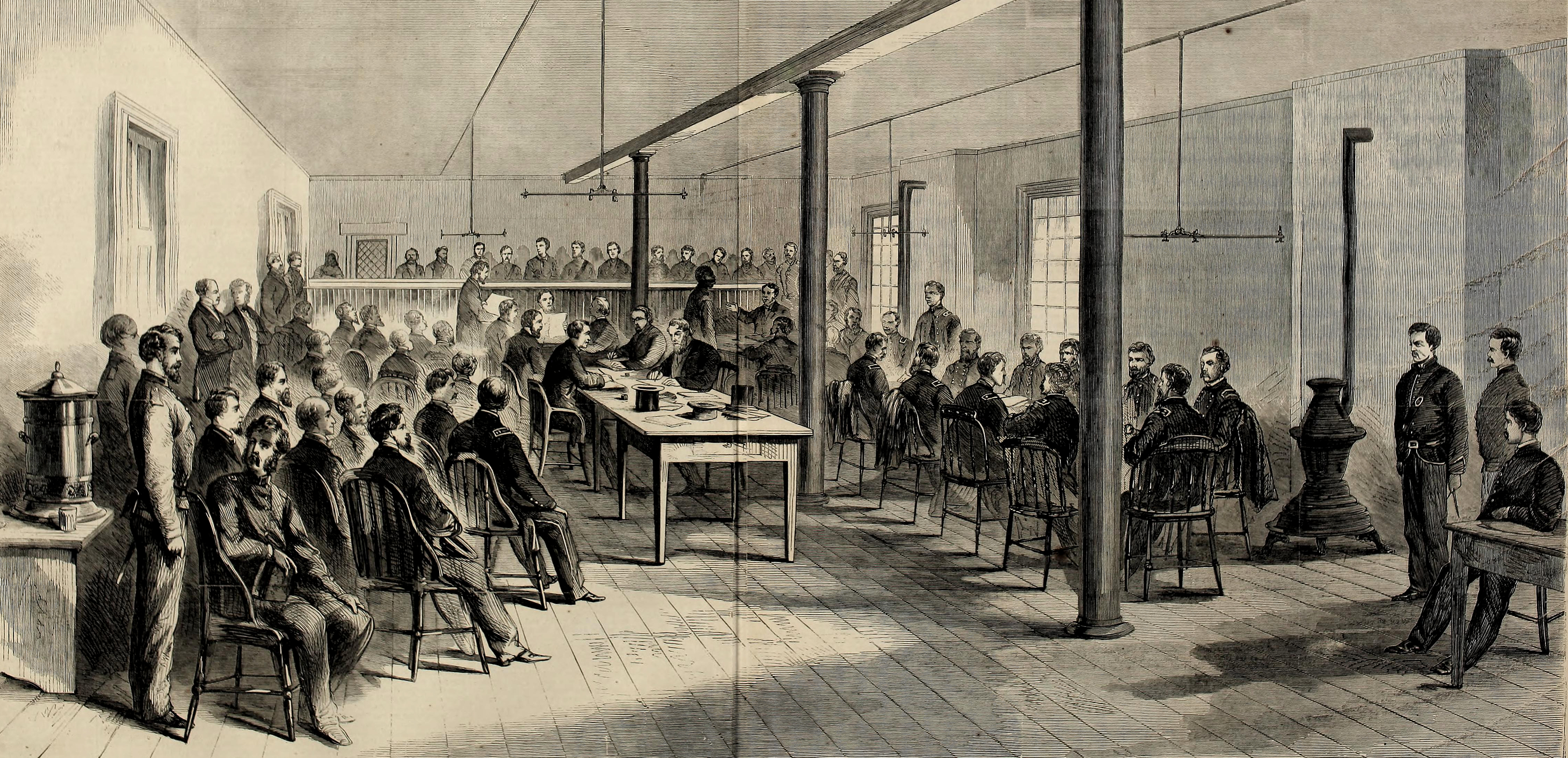
It is impossible to read or conduct any research on the assassination of Abraham Lincoln without coming across references to the 1865 trial of the conspirators. Eight of John Wilkes Booth’s alleged accomplices were tried by military commission from May 9 to June 30, 1865. The court sat for a total of 39 sessions and, during that time, they heard the words of 347 unique witnesses.[1] The proceedings in Washington that spring transfixed the nation. Many of the major newspapers across the country reproduced the daily testimony being brought out in that small room on the grounds of the Old Arsenal Penitentiary.

With a few exceptions, the trial of the Lincoln assassination conspirators met 6 days a week, Monday – Saturday, for 8 weeks. In this project, each day of the trial is broken up into its own entry. Clicking on a date will provide you with the proceedings of that day and the summarized testimony given. Descriptions of the conspirators, visitors, and first-hand accounts of its participants are also included for each day when such material is available.
For ease of use, each day begins with a Table of Contents that allows you to click on a specific witness or conspirator to jump straight to their corresponding testimony or description further down on the page. The start of each witness’s summarized testimony contains a hyperlink to their full testimony in case you want to read it for yourself. In addition, if the witness or lawyer makes reference to a previous witness or testimony, links have been included for easy reference.
The purpose of this project is to provide an educational resource into the daily proceedings of the trial of the Lincoln assassination conspirators and, by doing so, to support learning opportunities about this momentous event in our history.
| Pretrial
Trial Week 1 Trial Week 2 Trial Week 3 Trial Week 4 Trial Week 5 Trial Week 6 Trial Week 7 Trial Week 8 |
Click on the images below to see the testimony relating to each individual conspirator. 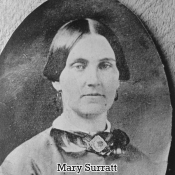   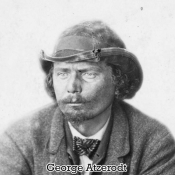 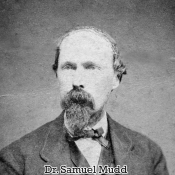 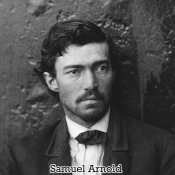 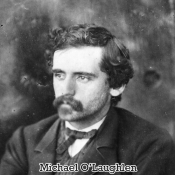 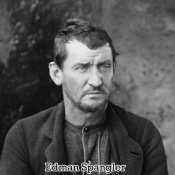 |
Acknowledgements:
This project would not have been possible without the support and help of Michael Kauffman, Bob Bowser, Dr. Michael Di Giacomo, Betty Ownsbey, Tom Bogar, Bob Summers, Jim Garrett, Bill Binzel, Colleen Puterbaugh, Jane Westenfeld, Adam Selzer, Travis Ramirez, and illustrator Jackie Roche.
This project is also greatly indebted to William Edwards, whose transcription of the trial testimony was the foundation for this project, and for the work of late assassination author Art Loux whose book, John Wilkes Booth: Day by Day, served as its inspiration.
If you are interested in seeing a bibliography of the different sources used in assembling this project, please click here.
[1] This total of 347 unique witnesses comes from counting how many individual people testified regardless of how many times they were recalled. Many of witnesses at the trial were called to the stand multiple times and across multiple days. 347 also includes the testimonies of 4 individuals who never physically entered the courtroom but had their testimonies included in the record in written form. If one were to count how many times a physical witness took the stand, regardless of whether that person had testified before, the number of total witnesses grows to 443.





 LincolnConspirators.com
Just found your site after it was shared on a facebook group and am very interested in reading about certain days. My 2nd great grandfather, Daniel Eldridge Monroe testified June 10th, as a young man living in Charles County he was was part of the search party looking for Booth. He became a lawyer in Baltimore and married Louisa Church, whose uncle John Buckingham was the doorman at Ford’s theatre that night and testified on May 15th. After Louisa died, Daniel Eldridge Monroe remarried, and his second wife was Dr. Mudd’s youngest daughter, Nettie. I have often wondered if it was his connections to the Trial that helped him meet his wives.
Katie,
Your ancestor was an interesting man. I enjoyed including his reminiscences about the trial on the June 10th page. I had no idea there was a family connection between John Buckingham and Monroe’s first wife. Thank you for sharing that. Until June 10th rolls around, here’s a picture of your ancestor:
Hey Dave, would YOUR sentences of any conspirators have been different than what they actually got? I shall assume you wouldn’t execute Mary Surratt. But what other changes would you personally have made?
I would have found Spangler innocent of the charges against him. In terms of sentences, however, I don’t know. I don’t agree with capital punishment but that’s a personal preference. Still, I believe the commission made a reasonable delineation between those who were merely involved in the abduction plot and those who likely knew of the assassination before it occurred.
Dave, sorry, forgot to ask: Is it true that all telegraphs around the city were down the night of the assassination? If so, why?
No. The only telegraph line that went down on the night of April 14th was a civilian line. It was deliberately put out of commission by the telegraph operator who feared the telegraph lines could be used by other, unknown conspirators to coordinate attacks. He purposefully cut his line. There is a great article by historian Art Loux about the telegraph lines on the night of Lincoln’s assassination. It was conspiracy theorist Otto Eisenschiml who erroneously claimed all the telegraphs went out in D.C. that night.
Dave, I’m told you might be able to answer. I’ve talked to Dr. Steers and Dr. Holzer, and the LOC and NARA can’t help. I’m wondering if there’s a list of newspaper reporters who were allowed to witness the trial, and also, more importantly, the executions. I know reporters were allowed into the trial because have seen stories saying so. I need to know if there’s a list, but especially of those allowed to witness the hangings. Many thanks, Bill Hendrick, Atlanta area.
Bill,
While I don’t know the specific reporters who were present at the execution, the National Republican newspaper gave a description of the reporters who were present at the conspiracy trial on May 15:
“At the green table used for the reporters were seated L[awrence]. A. Gobright and F[rancis]. H. Smith, of the Associated Press; C[rosby] S[tuart] Noyes and James Croggon, of the Star; Messrs. [William B.] Shaw and [Uriah Hunt] Painter, of the Philadelphia Inquirer; John B. Woods, of the Boston Daily Advertiser; A[ugustus] R. Cazauran, of the Washington Chronicle; W[illiam] A[ugustus] Croffut, of the New York Tribune; W[illiam] W. Warden, of the New York Times, and R[ichard] F. Boiseau, of the Republican.”
Dave, I subscribe to newspapers.com but don’t see the contents of your reply. I do recognize a few of the names. Gobright was the chief of the Associated Press, and Painter was a correspondent for the Philadelphia Inquirer. Perhaps the National Republican isn’t in the Newspaper.com database. Any way you could send me a jpg or pdf of that page? I read yesterday that only about 20 reporters were allowed into the trial.
Thanks, Bill
Bill,
I just emailed you the article which I got from GenealogyBank.com. From other entries in the Visitors section of different trial days, it’s clear that the number of reporters changed day-by-day and anyone who claimed to be a member of the press could be allowed in. This is likely why there is no official list.
Came across this site when I was browsing for further reading after watching Robert Kelleman’s youtube videos.
And oh boy, is this the greatest repository about the assassination, trial & related information! Wonderfully detailed & thorough. Must have taken a long time to put this together. Great work!!
Dave, do you think George Atzeroot is actually guilty,
why or why not, by Aaron sanchez
I think the evidence clearly shows that George Atzerodt knew of the planned assassination of Abraham Lincoln and other members of the cabinet. He freely admitted this knowledge to the authorities after he was captured. George likely hoped that Booth was full of bluster and wouldn’t go through with the attack, but this was just wishful thinking. By the law of conspiracy, George Atzerodt was deemed guilty of conspiring in the death of Lincoln. He could have possibly prevented the death of Lincoln had he gone to the authorities that evening before the shot was fired, but he didn’t. Whether his crime warranted execution is a matter of debate, but I believe his culpability in the crime was well proven.
But don’t take my word for it. Check out the testimony against him here: https://lincolnconspirators.com/the-trial/george-atzerodt-testimony/
And read his confessions here:
Then decide for yourself if you think Atzerodt was guilty.