Monthly Archives: September 2012

Some Real Booth Mummies

Finis Bates spent many misguided years trying to convince the world that John Wilkes Booth escaped death at Garrett’s farm. He displayed the mummified remains of David E. George and tricked people into believing the body’s convoluted identity trail from David George, to John St. Helen, to John Wilkes Booth. Bates created convincing pseudo-history with a dead body as an effective centerpiece. However, long before the real John Wilkes Booth was even born, the Booth family had a legitimate connection with mummies.  I quote from Asia Booth Clarke’s book, Booth Memorials: Passages, Incidents, and Anecdotes of Junius Brutus Booth (The Elder):

“About this time [1833] my father [Junius Brutus Booth] purchased two Egyptian mummies, with a view of presenting them to General Jackson. They were to be sent to the Hermitage; but, finding that they were such rare specimens, it was suggested that they should be reserved for the Museum in Washington, for which Mr. Varden was then collecting curiosities. The mummies were priests of the god “Apis; ” and, on examination, the papyrus manuscripts, although in excellent and legible order, proved to be of such antiquity that it was impossible for the literati of that day to translate their meaning.

Languages, like nations and religions, take their turns and seem to prove the mutability of nature. Mr. Varden’s design being ineffectual, the mummies were subsequently deposited in the Patent Office, Washington, and removed thence to the Smithsonian Institute.”

The eccentric Junius, was one of contradictory tendencies at times.  He cherished life in all forms, forbidding the killing of animals in his home and following the practically unheard of practice of vegetarianism.  At the same time though, he was friends with people like Sam Houston and Andrew Jackson.  Original Boothie John C. Brennan once said how odd a gift he thought the mummies to be for Jackson as Jackson wasquite good at, “shooting people and producing his own cadavers”.  The actor who wept during his organized funeral for dozens of killed pigeons, did not have the same reverence, it seems, for the remains of the long dead Egyptians.

According to Michael Kauffman in his book American Brutus, no donation record can be found for Junius’ mummies at the Smithsonian.  Nevertheless, as I visited the Smithsonian’s National Museum of Natural History and explored the Ancient Egypt exhibit today, I couldn’t help but wonder if one of the mummies on display once belonged to Junius Brutus Booth.  At least then there would be a real “Booth Mummy”.

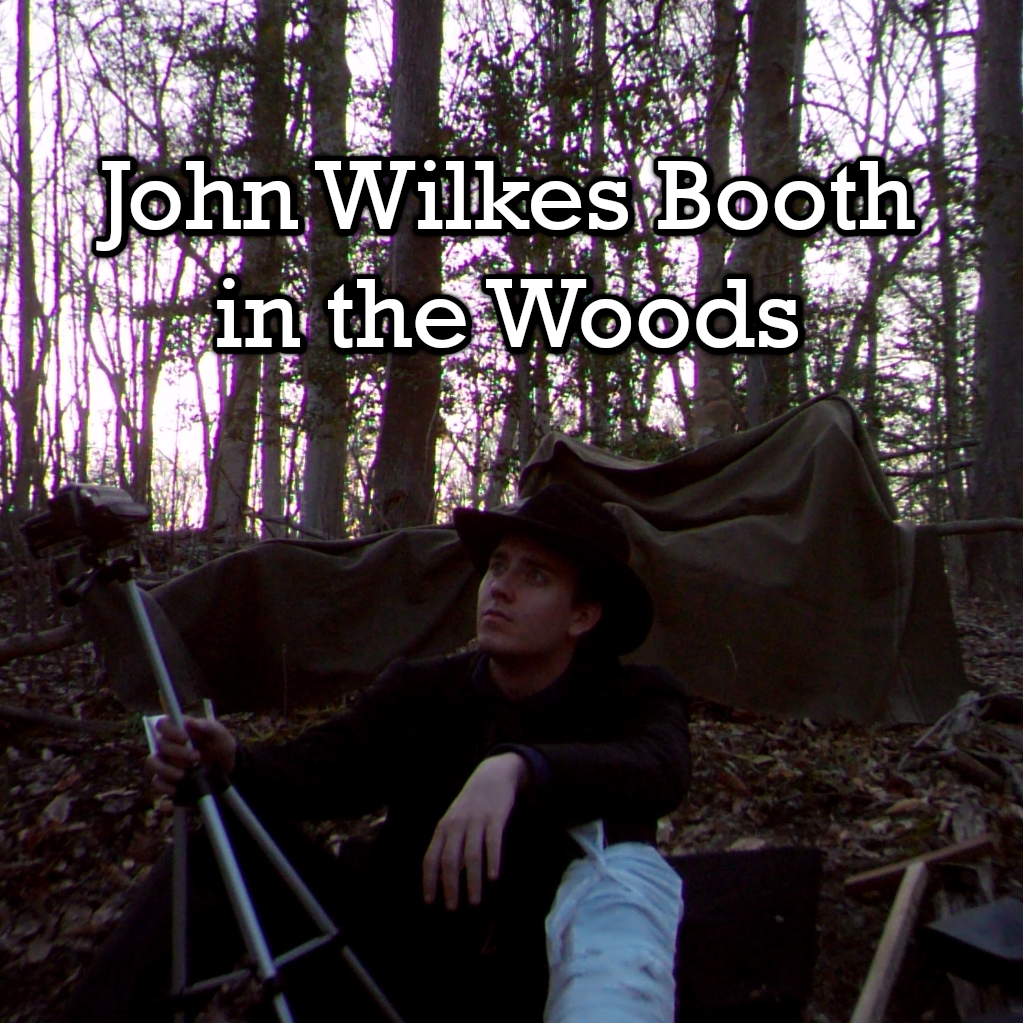
John Wilkes Booth looking for his father’s donated pair of mummies in the Smithsonian.

References:
Booth Memorials: Passages, Incidents, and Anecdotes of Junius Brutus Booth (The Elder) by Asia Booth Clarke
American Brutus by Michael Kauffman
The photo of JWB in the Smithsonian was taken using the Augmented Reality function of Michael Kauffman’s new publication, In the Footsteps of an Assassin.  After purchasing the book, smartphone users are able to download an app which provides tour commentary on the go.  It also includes four augmented reality photo ops in which an overlay of Lincoln, Mary Todd, JWB or Lewis Powell, can be added before taking any picture.  Now, I can take snap a photo of Booth anywhere, without any photo editing required.

Categories: Uncategorized | Tags: , , | 6 Comments

Mystery Pictures Part II – Bits and Pieces

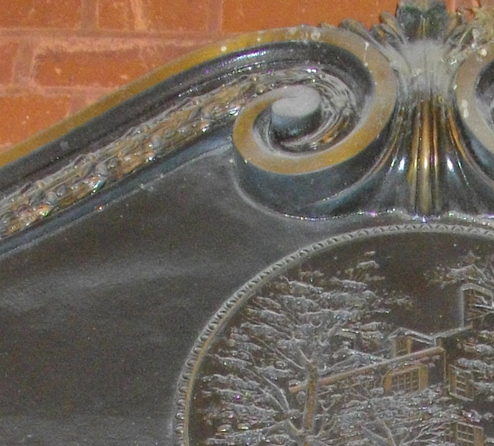
Time for a bit of trivia and entertainment here on BoothieBarn.  Try your best to see if you can figure out what is shown in each of the twelve pictures below.  This time, I have only given you bits and pieces of the entire item or place.   When you think you’ve got them all (or given up) click on the “Check Your Answers” link below.  Good luck!

Mystery Picture #1:

Mystery Picture #2:

Mystery Picture #3:

Mystery Picture #4:

Mystery Picture #5:

Mystery Picture #6:

Mystery Picture #7:

Mystery Picture #8:

Mystery Picture #9:

Mystery Picture #10:

Mystery Picture #11:

Mystery Picture #12:


Check Your Answers!

So, how did you do?

Categories: Uncategorized | Tags: | 6 Comments

Booth and Lincoln

“In 1863 or 1864, Robert [Todd Lincoln], on vacation from Harvard, was traveling from New York to Washington and waiting at the train station at Jersey City, New Jersey. While standing in line for tickets on a station platform, Robert was pressed by the crowd against the waiting train – which than began to move forward – and he fell into the narrow space between the train and the platform. He was helpless to escape when a hand grabbed his coat collar and pulled him up onto the platform. Robert turned to find his rescuer to be Edwin Booth, America’s most revered stage actor who was traveling to Richmond, Virginia with his friend John T. Ford (owner of Ford’s Theatre in Washington, D.C.) to fulfill an engagement. Robert recognized the actor and thanked him by name. ‘I was probably saved by [Mr. Booth] from a very bad injury if not something more.”…Robert later wrote that although he never again met Edwin Booth in person, he always had a “most grateful recollection of his prompt action on my behalf.'”

The story above is a fairly well known and publicized coincidence between a Booth and a Lincoln. The book I quoted from is Jason Emerson’s biography of Robert Todd Lincoln, Giant in the Shadows: The Life of Robert T. Lincoln. Mr. Emerson was a speaker at the 2011 Surratt Society Conference in which he discussed this encounter between the two men. He recounted that, as time progressed, the story of Edwin saving Robert Todd, became more and more grandiose. In one version of the tale, Robert Todd was supposedly knocked unconscious by the fall and Edwin pulled up his limp body. The most extreme incarnation though, was the one that had Robert Todd Lincoln oblivious to the fact that he was on a set of train track as a train came barreling down towards him. With almost superhero speed, Edwin Booth then ran forward and leapt into the air, tackling Robert out of the way of the train just in time.

A Reader’s Digest illustration of the Booth-Lincoln encounter

Though that last version had very little basis in fact, the true story continues to be told over and over by many newspapers, magazines and websites, due the palatable irony that surrounds the characters. We all know how this Good Samaritan tale would one day be eclipsed by a different “Booth and Lincoln” story.

References:
Giant in the Shadows: The Life of Robert T. Lincoln by Jason Emerson

Categories: Uncategorized | Tags: , | 4 Comments

“Thus perished four…”

The day after the four conspirators were hanged, one soldier penned the following letter to his family back home in New York:

“Camp Stoneman  D.C.

July 8th 1865

Darlings at home

Before you receive this you will probably have read all about the execution of the conspirator’s at the Washington Penitentiary yesterday.  My regiment was on duty immediately in the yard and around the gallows.  Consequently I had a fine view of the preparation and the final execution of the criminals.  The yard was an enclosure by high brick walls and buildings of probably a half acre of ground.  The gallows was erected at one corner about 30 feet from a door which lead into it from the prison.  The platform was about ten feet high and the beam from which the ropes was suspended was about 10 feet above the platform.  That portion of the platform for 4 feet which was a sort of trap door hung upon hinges and supported by a single prop which was to be knocked out from under them by a sort of battering ram.  The prisoners were accompanied to the gallows by the officers in charge of the execution and their spiritual advisers.  Who in behalf of each thanked the officers and soldiers who had charge of them for this uniform kindness to them.  And after praying with them (and I never heard more eloquent and stirring appeals made to a throne of diving grace) they were caused to stand up on the fatal trap, where their arms were tightly tied behind them and their legs tied at the ankle and knees – the cap drawn over their face the rope adjusted and drawn tight around the neck the signal given and four unhappy victims were suspended in the air by the neck.  I stood very near on horse-back where I had a good opportunity to see every motion.  I did not discover the least motion of a single muscle on Mrs. Surratt – and but very slight on Atzerodt.  Payne and Harrold did not pass off so quickly.  Harrold showing signs of life for nearly five minutes and Payne for full seven minutes.  After hanging for the space of 20 or 30 minutes they were taken down, laid in rough boxes, and buried near the foot of the gallows.  Thus perished four of the greatest criminals our land has ever produced.  And my only regret is that the balance of the band had not shared the same fate.  It seemed hard indeed to see a person bearing the almost divine shape of woman lead out by men alone executed and laid away with none but the hands of rough soldiers to care for her.  I never before saw such picture of absolute despair and fear upon the face of a human being.  Mrs. Surratt was nearly unable to stand.  In fact Payne was the only one of the party that showed any signs of courage or manliness.  I see by the papers today that the clergymen who attended them express much hope that they passed from this to a better world.  If so, how much better than they to their intended victims whom they endeavored to send into the presence of their God with one moment’s preparation.  I hope it will be my fortune to witness the execution of Jeff. Davis, & then shall I, indeed, feel that the rebellion is crushed.  And when you hear any one say that Jeff. will never be hung, “that Andrew Johnson is President and that he is supported by officers who are good and true,” in such hands we are safe.  The day has come when we have in authority those who care more for their country than they do for themselves or party.  And I trust that it may be long before any others shall obtain the reins of Government and seek again to draw us down to ruin.

Then I have written you a good long letter, at least, a long one.  And shall have but very little room for anything else – though as tomorrow is Sunday I presume I shall write again.  I wrote you a good long love letter but a day or two ago, as I shall not mail this till evening perhaps I will write a little more before I send it.

Give my love to all the friends.  Kiss the dear children for me.  Good day to you and God bless you all.

Most affectionately,

S.D. Stiles”

The author of this account is Sampson D. Stiles who was a member of the New York Cavalry.  The photographic record does not show any soldiers on horseback as Stiles states he was, but it is know that General Hartranft requested cavalry members to report to him:

“Mil. Prison Wash. Arsenal

July 6th, 1865

Colonel-

I will require a Company of Cavalry in addition to the twenty sent me today.  Will you be kind enough to order them to report to me at 8 o’clock tomorrow morning.  I will need them only during the day.

Very Respectfully – Your Obt. Servt. –

Bvt. Maj. Genl. Gov. Com’dr. M.P.

Colonel Taylor

A.A.G. –Dept.Wash.-”

So while we see no mounted soldiers in the execution photos, the request for Cavalry soldiers and the details in Stiles’ letter home gives the strong impression that he was there.

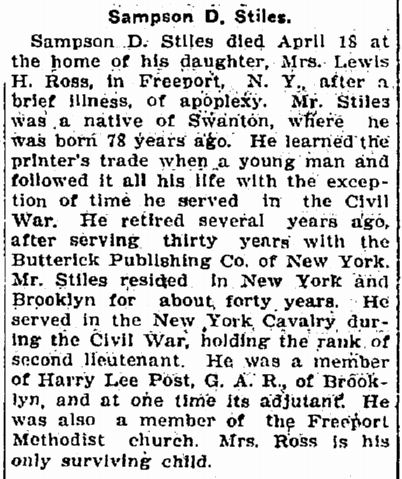
Sampson Stiles’ 1905 obituary in a Vermont paper

References:
Stiles’ account comes from the James O. Hall research papers
The Lincoln Assassination Conspirators – Their Confinement and Execution, as Recorded in the Letterbook of John Frederick Hartranft edited by Edward Steers and Harold Holzer

Categories: Uncategorized | Tags: , , , , | 7 Comments

Blog at WordPress.com.